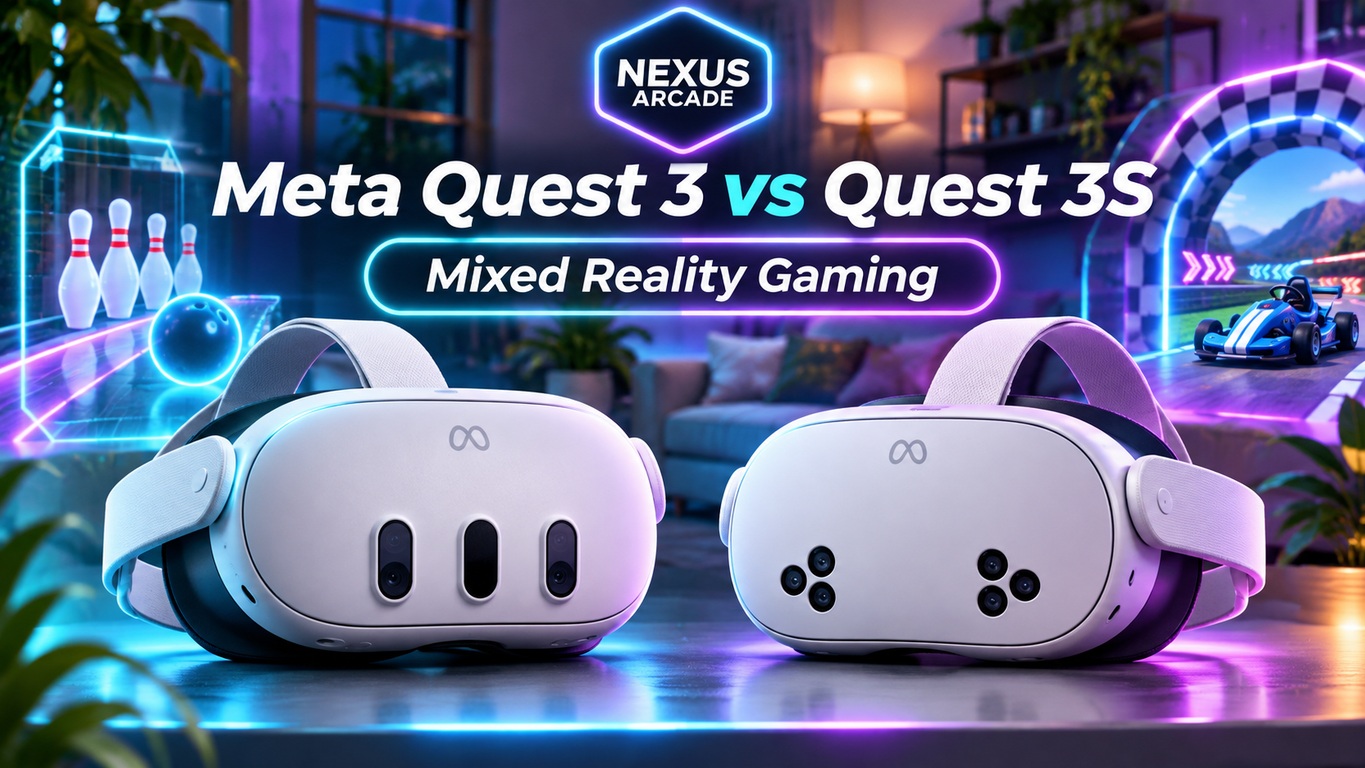
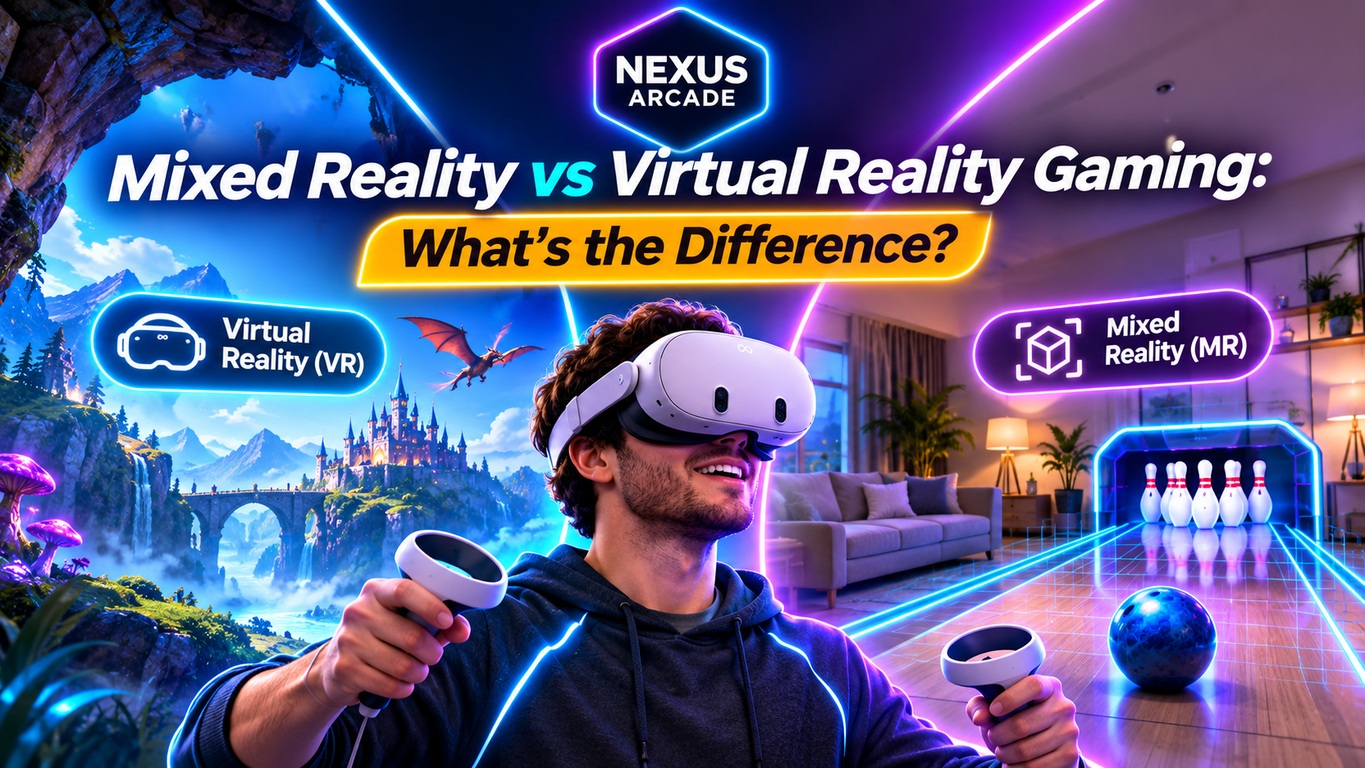
Put on a Meta Quest headset and you could find yourself exploring a fantasy world or bowling beside your own sofa. Both experiences use immersive technology, but they approach gaming differently. Virtual reality (VR) takes you into a digital environment, while mixed reality (MR) brings digital gameplay into your physical surroundings.
Meta Quest 3 and Quest 3S support both approaches. Which one suits you depends on what you enjoy playing, how you like to move and whether your real room should be part of the experience.
1. Virtual Reality: Escape Into Another World

In a fully immersive VR game, the headset replaces your view of the room with a computer-generated scene. Turn your head and you might see a mountain, a spacecraft or the interior of a racing car instead of your furniture.
This makes VR particularly appealing for adventures, exploration and simulations where the setting is part of the story. Developers control the scenery, lighting and atmosphere, creating places that could never fit inside your home.
The trade-off is that your physical surroundings are less visible during gameplay. Even when a virtual world looks enormous, your actual movement is limited by the space available to you.
2. Mixed Reality: Make Your Room Part of the Game

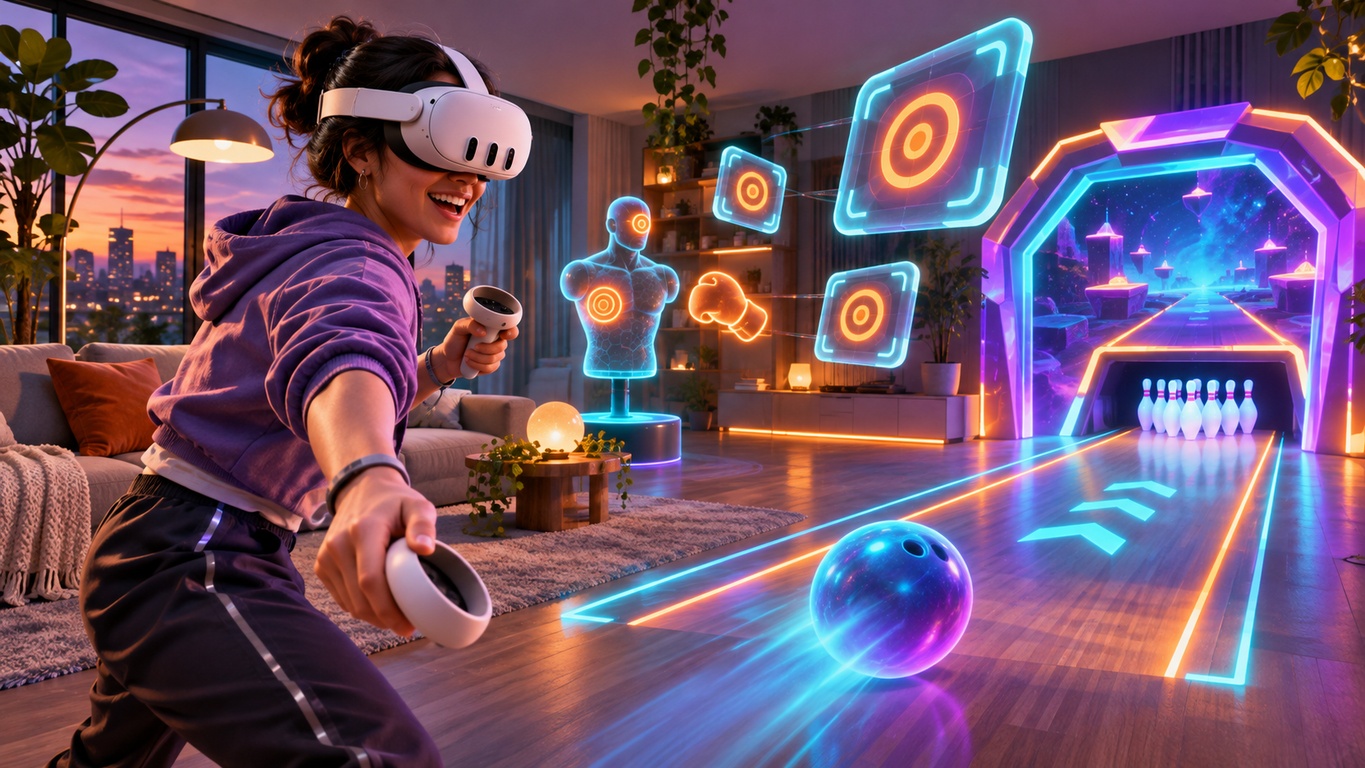
Mixed reality is different because the physical setting remains part of the presentation. Colour passthrough on Quest 3 and 3S provides a camera-based view of your surroundings, allowing compatible games to display interactive digital objects within it.
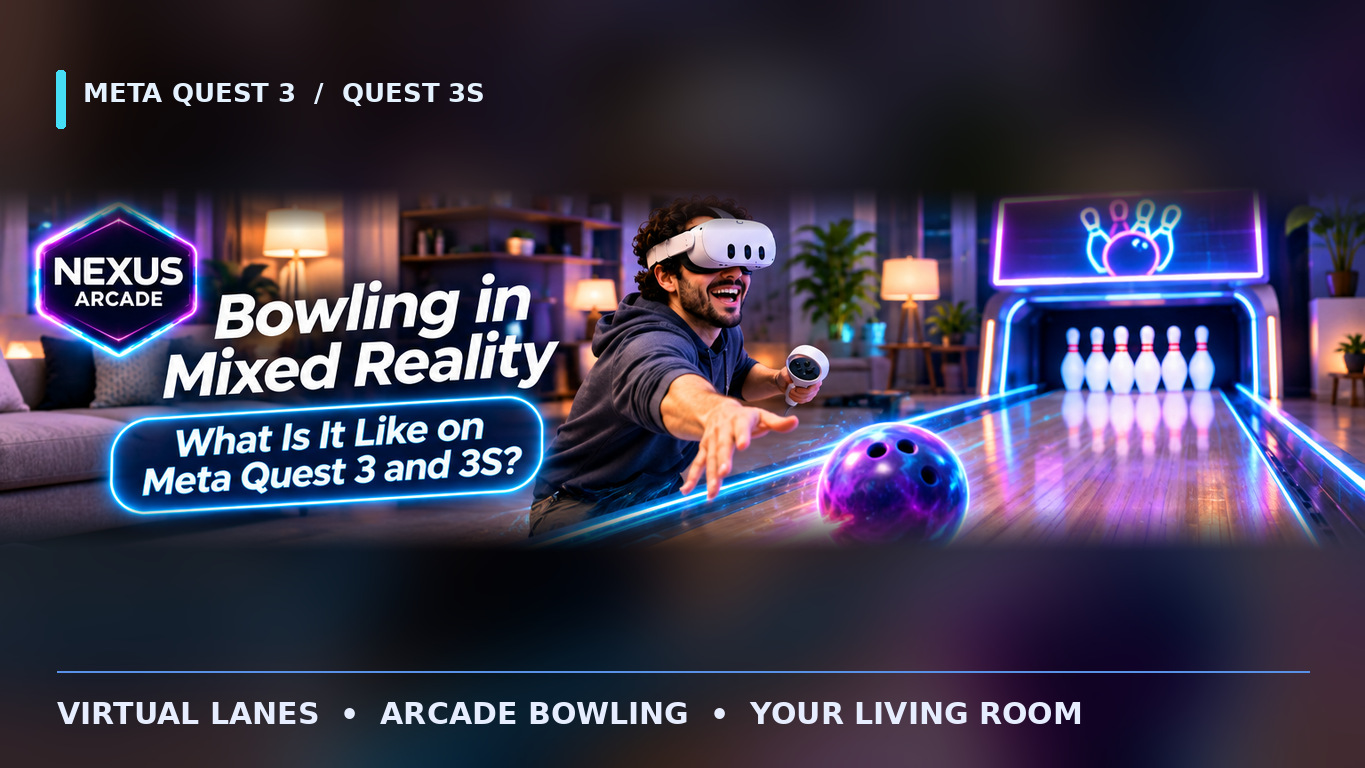
For example, Nexus Arcade's Tenpin bowling lets you position a virtual bowling experience in your space. Instead of entering a completely fictional bowling centre, you can recognise the room around the lane.
MR is particularly interesting when a familiar environment adds something to the gameplay. For a look at the technology behind this, read our guide to how mixed reality games work.
3. Which Is More Immersive: VR or MR?
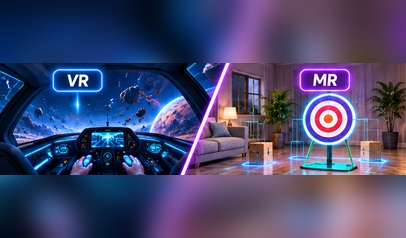
Immersion is not just about hiding the real world. A VR adventure can make you feel transported to another place, while a mixed-reality game can make a digital object feel as though it belongs in your home.
Think about the difference between exploring a virtual castle and seeing a miniature castle appear on your table. The first creates a sense of being somewhere else; the second creates a sense of something new being here.
Neither approach is automatically more convincing. The controls, sound, visual quality and responsiveness of a game all contribute to the experience.
4. Does Mixed Reality Feel More Comfortable?
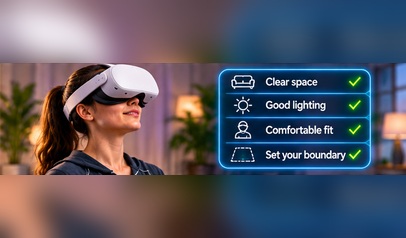
Some players may prefer seeing familiar surroundings, particularly during stationary or room-based activities. Others enjoy the distraction-free environment of fully immersive VR. Comfort varies by person and by game.
Artificial movement, sudden camera changes and demanding physical actions can affect how comfortable an experience feels. Mixed reality is not a guarantee against motion sickness, and passthrough does not reproduce natural vision perfectly.
Check each game's comfort guidance and required space. Start with manageable sessions, stop if you feel unwell and follow our Quest room-setup guide before active play.
5. Why Some Games Combine Both Approaches

A game does not have to choose one format for every activity. In Turbo Tracks, the Nexus Arcade room and its portal connect you to a virtual racing environment. Other modes, such as boxing mitt training and Blast Arena, focus on interactive arcade challenges.
From a development perspective, the choice should serve the gameplay. A large racing world and a room-based sports activity have different design requirements. Nexus Dev Studio, the team behind Nexus Arcade, works across VR and mixed-reality development, where selecting the right format, interaction style and target hardware matters from the earliest prototype.
6. Should You Choose VR or Mixed Reality Games?
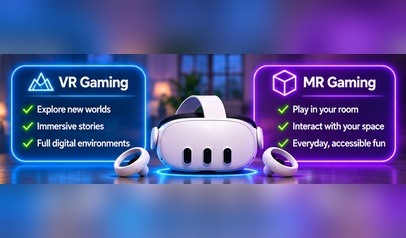
Choose games based on the experience you want rather than the technology label alone:
- VR: Explore imaginary worlds, enjoy cockpit racing or become immersed in a story.
- MR: Bring interactive activities into a familiar room and experiment with spatial play.
- Combined experiences: Explore games that move between physical surroundings and virtual worlds.
Check the store listing for supported modes, controls and comfort requirements. Both Quest 3 and 3S can access compatible VR and MR experiences. If you are starting out, explore our guide to free mixed reality games and Meta's passthrough guidance.
VR is excellent for going somewhere new. Mixed reality is exciting because it changes what you can experience where you already are. There is no need to pick a favourite before trying both.
Ready to explore mixed-reality gaming? Download Nexus Arcade free on the Meta Horizon Store for Quest 3 and 3S and discover four arcade experiences in one game.